A Farmer Who Can't Code Runs a 100-Hectare Farm With AI, Half the Systems Run on LINE
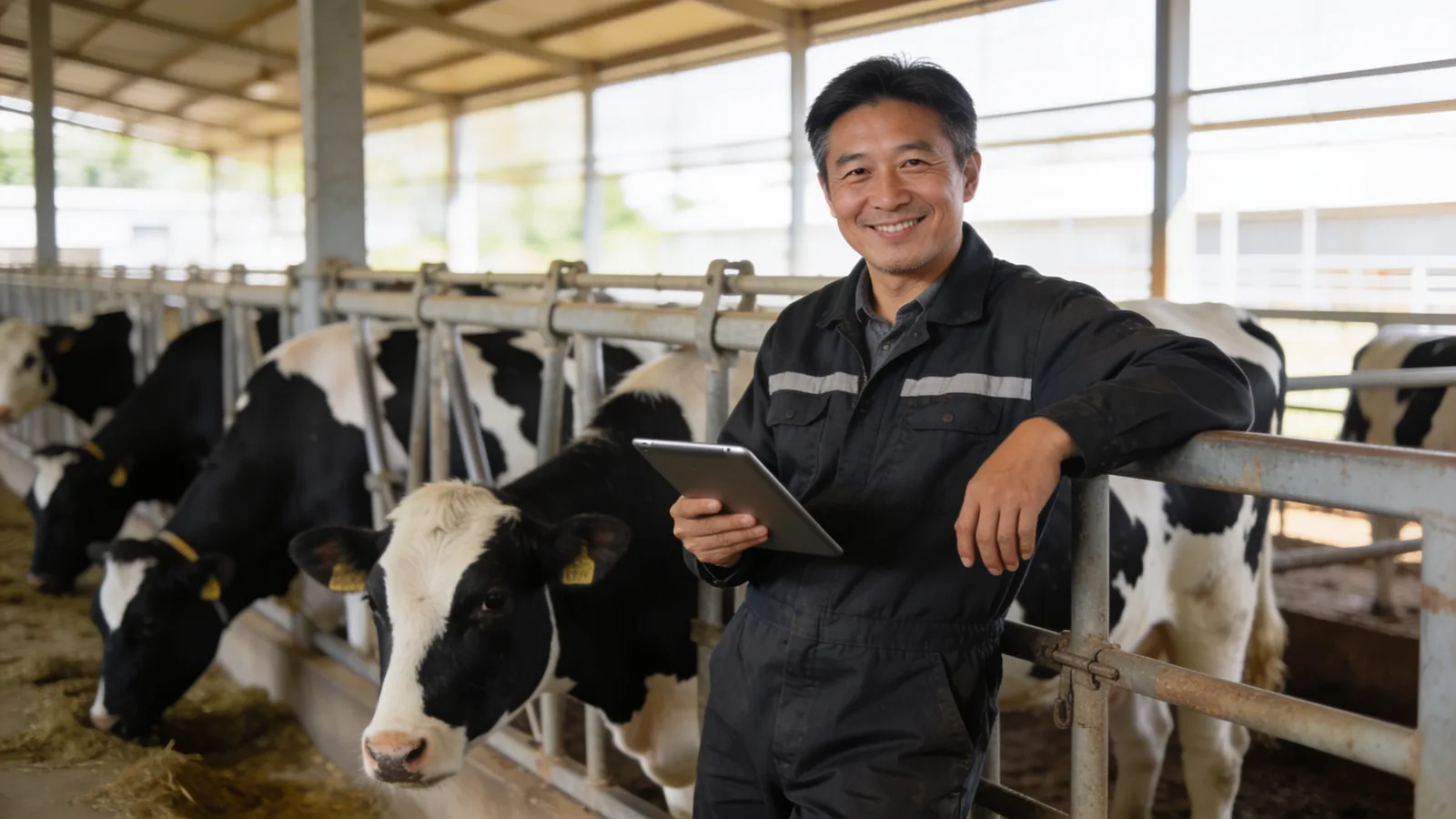
Last time, we looked at a US dairy farm's "skip the API, start from a folder" approach. This one goes further: a farmer in Hokkaido with zero engineering background started from a plain-language description of what he needed, and used ChatGPT to build eight custom systems, single-handedly running a 100-hectare farm. The detail Taiwan businesses should pay closest attention to: four of those eight systems are operated through an interface you already use every day, LINE.
Context: written for the Taiwan market; the case study is from a farm in Hokkaido, Japan, cited for its method rather than local figures.
Eight systems, and what they actually do
This is a real user story published in OpenAI's own outreach: farmer Hiroki Tomiyasu has no coding background at all. What he did was "describe the problem clearly" and let AI translate the requirements into working code. The eight systems include:
- A first-pass photo screen for pest and disease damage
- Satellite-imagery vegetation index (NDVI) monitoring
- An assistant that reads and explains equipment wiring diagrams
- Remote greenhouse control: sending "open / close / stop" over LINE to operate the greenhouse vent shades
- A chatbot for the farm's work group chat
- Automatic structuring of chat-log records
- Understanding and evaluating RTK-GPS autosteer options
- A ten-category farm-management database built in Airtable
The greenhouse-control system's stack: AI-written code wiring together an ESP32 board, a motor driver module, and a 24V roller-shade motor, with a lightweight cloud backend (Cloudflare Workers plus a D1 database) and a LINE bot as the front end. The reported equipment cost is in the low hundreds of US dollars. Not a multi-million-dollar automation project, a few hundred dollars.
The real barrier: not code, but PM thinking
The single most important line in this whole case isn't a technical term, it's this division of labor:
Defining the problem, describing the requirement, accepting the result, owning the risk, that's the human's job.
Translating the requirement into code, that's AI's job.
In other words, the skill worth practicing before you learn to code is the ability to break a problem down clearly. Most owners already have this skill; they just haven't applied it here. You already "describe a requirement, then check the result" with your staff every day; the only difference is that the other party is now AI, and the clearer the description, the better the system you get.
He summarized his own path in three stages, which double as a ready-made adoption roadmap:
- Beginner: hand repetitive tasks to AI for a first draft; a human checks the facts. Get used to the rhythm of "assign, then review."
- Intermediate: before starting, write down "data source, processing rule, output format" clearly, then ask AI to design a semi-automated pipeline.
- Ongoing: after every small automation, write a hundred or two hundred words, problem, how you asked, result, what went wrong. That log becomes the most valuable internal asset your company owns.
Why "runs on LINE" matters especially for Taiwan
Four of the eight systems (greenhouse control, the group-chat bot, log structuring, database lookups) all use a LINE bot as their interface. The logic behind that choice is pragmatic: it asks nobody to learn a new tool. Staff are already on LINE; a command is just a message.
Taiwan's business environment closely resembles Japan's: LINE is where internal and external communication already happens. That means there's a path of least resistance for AI adoption: put AI inside the interface people already use, instead of standing up another system nobody wants to log into. Checking inventory with a message, reporting a repair with a photo, having daily logs auto-compiled into the group chat, it's all the same pattern.
Read this alongside the dairy-farm case from last time and the roadmap is complete: on the data side, a "folder-first MVP" keeps startup cost low; on the operating side, an existing tool like LINE lowers the barrier to actually using it. Neither side needs a major build to start.
This case is based on the subject's own account, published as OpenAI outreach material, and hasn't been independently verified; the cost figure (low hundreds of dollars) is approximate; some images in the published material are labeled as AI-generated illustrations rather than real photos. We could not locate a dedicated case-study page on openai.com itself; our citation draws on OpenAI's outreach coverage and independent tech reporting of the same story, so treat this as "evidence the approach works," not as line-item-auditable industry data.
Separately: once you connect equipment control to a chat interface, safety design has to be settled on day one — who can issue commands, what happens on a bad command, and what the equipment's default behavior is when disconnected. The published material doesn't dwell on this; it's the first thing we'd check in a real rollout.
Can someone with zero coding background really build systems like this?
This case suggests it's possible, but it's vendor-published material, not independently verified. What's reasonably certain is the method: describe the problem, data sources, processing rules, and output format clearly, and let AI translate that into code; the clearer the description, the better the result. Start with one repetitive task, not eight systems at once.
Why use LINE as the control interface instead of building a dedicated app?
Because staff are already on LINE: a command is just a message, with no new tool to learn and no extra account to remember. Putting AI inside an interface people already use is the path of least resistance for adoption; standing up a system nobody wants to log into is a common way automation projects fail.
Is it safe to control equipment through LINE?
Safety design has to be settled on day one: who can issue commands, what happens when a command is wrong, and what the equipment's default behavior is when disconnected. The published case material doesn't dwell on this, so in a real rollout these are the first three things we'd confirm before talking about features.
What's the one thing at your company that should just become "send a LINE message and it's done"?
Tell us how you handle it today, and we'll help you work out what to automate first and roughly what it would take.
Talk to us about your process